Dead Time Is Prime Time: How to Turn Your Commute Into a Better Day
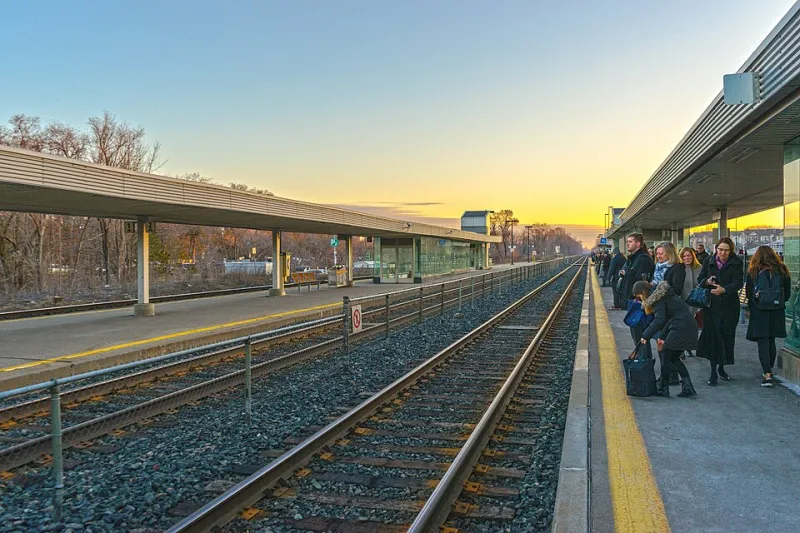
Photo: Arun Agrawal, CC BY-SA 3.0, via Wikimedia Commons
The average American spends somewhere around 25 minutes getting to work each way. Add it up and it's a couple hundred hours a year — a genuinely large chunk of your life sitting between the front door and the desk, usually spent replaying yesterday's awkward comment or half-reading a stranger's vacation photos.
But here's the thing about the commute: it's the most reliable alone time most adults get. No one needs anything from you. Nobody's texting you expecting a reply in a hallway. You are, briefly and structurally, off the grid. That's not dead time. That's a slot nobody else has claimed.
Why it's worth spending deliberately
Commutes sit exactly where the day gets decided. Whatever mood you carry through the door tends to set the tone for the first two hours — and the way you leave work tends to set the tone for the whole evening. That makes the ride home just as valuable as the ride in, maybe more, because that's the one that determines whether you arrive at dinner as a person or as a raw nerve.
You don't need a full overhaul. You need one ritual, chosen on purpose, repeated until it's automatic. Here's the menu.
Six rituals to test
1. Boundary audio
Pick something to listen to that belongs entirely to the transition — a podcast, an album, an audiobook — and make a rule that it only exists in transit. It becomes a door. When the first episode plays, work-brain starts to loosen; when the last one ends, you're usually home. The trick is choosing something that isn't news, because the news is just more input.
2. The one-thing preview
Before you start moving, decide the single thing that would make the day feel successful. Not five things. One. Say it out loud in the car if that's your style. Then, on the way home, name the one thing you're walking away from — one thing that's done, or one thing you'll pick up tomorrow. It's a miniature handoff, and it keeps you from opening the front door mid-thought.
3. The sensory shift
Your nervous system responds to contrast, so build some in. Cold air on your face for thirty seconds before you get in the car. A different playlist on the way home than the way in. Windows down for a block. Wash your hands and change your shirt the second you walk in. All of it is small; the cumulative effect is that arrival feels like an event instead of an accident.
4. A scheduled worry window
If you're going to ruminate anyway — and on some commutes, you absolutely are — give it a container. Ten minutes, timer on, no screen. Worry hard, argue with your boss in your head, plan the difficult conversation. When the timer sounds, switch to something with a little texture: a comedy bit, an album you know by heart, a call to a friend. You're not suppressing the worry; you're telling it when to show up.
5. The phone-free stretch
Choose one leg of the trip where the phone stays in your bag or the console. Ten minutes, twenty, whatever's realistic. Not because phones are evil, but because the scroll is what turns a calm commute into a jittery one. If going fully phone-free feels impossible, delete one app from the home screen for two weeks and see whether you actually miss it.
6. The arrival ritual
Decide how you want to walk in. A slow breath at the door. A pointless but pleasant detour to the coffee place. Greeting the security guard by name. On the way home, a specific song or a specific block where you mentally close the workday. Arriving intentionally takes about forty seconds and changes how the next two hours feel.
Match the ritual to your mode
If you drive: audio is your best lever, but keep it low-stakes. Use the red lights, not the highway, for the preview or worry window — don't build a ritual that requires note-taking at 70 mph.
If you take transit: protect one segment from the phone and treat the rest as fair game. A physical book is oddly effective here, partly because it signals to the surrounding humans that you're not available for conversation.
If you walk: the commute is a free workout and a free transition in one. Try the last three blocks without audio. Neighborhoods sound different when you're not narrating them.
One is enough
The failure mode here is doing all six for four days and then abandoning everything by Friday. Pick the one that makes you exhale slightly when you read it. Run it for two weeks. If it sticks, keep it. If it doesn't, swap it — no ceremony required.
You've already got the time. You're just deciding what it's for. And a day that starts and ends with twenty minutes you actually chose tends to be a day that holds together a lot better in the middle.